
Nepalese Legal Translator
 Melbourne Translation provides professional Nepalese legal translation and Nepalese business translation services. Our certified Nepalese translators provide translation and proofreading for:
- Nepalese translations used in Australia legal courts
- Nepalese transcription and translation
- Business proposals in Nepalese
- Research papers in Nepalese
- Minutes, emails, business correspondence
- Annual reports in Nepalese
- Financial statements in Nepalese
- Financial audit reports
We are able to provide Nepalese legal document translation for research and understanding, or the Nepalese translations can be certified by a NAATI accredited translator to be presented as evidence in court.
Our dedicated managers and Nepalese translators understand the urgency in delivering legal translations, sometimes requiring attention after-hours or over weekends to prepare for a court hearing.
All Nepalese legal translation delivery is guided by our terms of service and privacy policy. To begin, please use the form on this page to submit your documents for a quote.
- There are no hidden charges for fast Nepalese translation by NAATI certified Nepalese translators
- Many happy repeat customers
- We provide discounts for repeat customers or large orders
- NAATI certified Nepalese translators for immigration or legal documents
- Full-time Nepalese translators experienced in translating all kinds of documents
- Personal, friendly service
Nepalese Translation Service Australia-Wide
- Sydney
- Melbourne
- Brisbane
- Perth
- Canberra
- Darwin
- Hobart
- Adelaide
- Wollongong
- Newcastle
- Cairns
Around 500 years ago, Khas from the Karnali-Bheri-Seti basin migrated eastward, bypassing inhospitable Kham highlands to settle in lower valleys of the Gandaki basin that were well suited to rice cultivation. One notable extended family settled in Gorkha, a small principality about halfway between Pokhara and Kathmandu. In 1559 AD a Lamjunge prince Dravya Shah established him in the throne of Gorkha with the help of local Khas and Magars. He raised an army of khas with the commandership of Bhagirath Panta. Later, in the late 18th century his heir Prithvi Narayan Shah raised and improvised an army of Khasa (Chhetri), Thakuri, Gurungs, and Magars and possibly other hill tribesmen and set out to conquer and consolidate dozens of small principalities in the Himalayan foothills. Since Gorkha had replaced the original Khas homeland as thary initiative, Khaskura was redubbed Gorkhali, i.e. language of the Gorkhas.
Expansion, particularly to the north, west, and south brought the growing state into conflict with the British and Chinese. This led to wars that trimmed back the territory to an area roughly corresponding to Nepal's present borders. Both China and Britain understood the value of a buffer state and did not attempt to reduce the territory of the new country further. Since the Kathmandu Valley or Nepal had become the new center of political initiative, this word gradually came to refer to the entire realm and not just the Kathmandu Valley. And so Gorkhali, language of Gorkha, again came to be known as Nepali.
Khaskura/Gorkhali/Nepali is spoken indigenously over most of Nepal west of the Kaligandaki River, then progressively less further to the east. This is shown graphically in detailed language maps of western and eastern Nepal as language number 73.
Our translators in Melbourne collaborate and work with colleagues from Sydney Translation Services to delivery fast NAATI translation services.
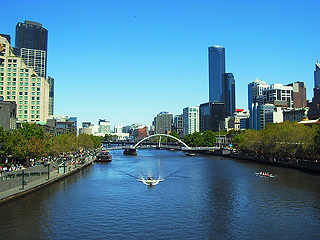
Melbourne is the capital and most populous city in the state of Victoria, and the second most populous city in Australia. The Melbourne City Centre is the hub of the greater metropolitan area and the Census statistical division—of which "Melbourne" is the common name. As of June 2010, the greater geographical area had an approximate population of four million. Inhabitants of Melbourne are called Melburnians or Melbournians.
The metropolis is located on the large natural bay known as Port Phillip, with the city centre positioned at the estuary of the Yarra River (at the northernmost point of the bay). The metropolitan area then extends south from the city centre, along the eastern and western shorelines of Port Phillip, and expands into the hinterland. The city centre is situated in the municipality known as the City of Melbourne, and the metropolitan area consists of a further 30 municipalities.
Nepalese Legal Translation
Upload your documents here for translationOur Valued Clients
