Simply attach clear scan or pictures of the pages required for review.
Montenegrin Translation Services
The best way to get accurate, culturally relevant translations is to hire a professional translator who is a native speaker of the language you are translating.
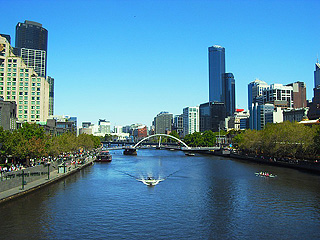 Montenegrin translators - Our NAATI Montenegrin translators provide fast and accurate Montenegrin translation services.
NAATI Montenegrin translator - All Montenegrin translation services we provide are prepared by experienced NAATI Montenegrin translators.
Montenegrin translator service - Melbourne Translation Services Montenegrin translators deliver Montenegrin document translation with a 100% acceptance rate for migration and legal purposes in Australia.
NAATI Montenegrin Translator
- Fast Montenegrin translation service
- Local translation company for NAATI translation services
- NAATI certified Montenegrin translation delivered in Melbourne and Australia-Wide
- Experienced Montenegrin translators with more than 10 years' experience
Montenegrin Business Translation Services
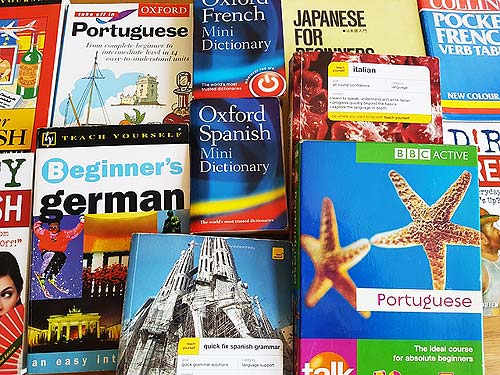 Get expert help in Melbourne for Montenegrin translation and layout of brochures, labels, namecards, flyers and packaging material.
Melbourne Translation Services's experience in assisting companies with Montenegrin translation and typeset ensures timely the delivery of your brochures and marketing material for print.
The Montenegrin Language
- Montenegrin is a standardised variety of the Serbo-Croatian language, spoken primarily in Montenegro, where it is an official language.
- It uses both the Latin and Cyrillic alphabets, although the Latin alphabet is more commonly used in everyday life.
- Montenegrin is very closely related to Serbian, Croatian, and Bosnian, and the differences are largely political and cultural rather than linguistic.
- The language was officially recognised in 2007, following Montenegro's declaration of independence in 2006.
- Montenegrin includes some unique phonetic features not found in Serbian, Croatian, or Bosnian, such as the sounds /ś/ and /ź/.
The Montenegro Language To The Montenegro People
This was a lecture of Prof. Dr. Vuk Minic, held at the forum of the Montenegrin University in Podgorica - April 8, 2003, before Montenegro's declaration of independence in 2006 and the language official recognition in 2007. Before gaining independence in 2006 (officially recognised in 2007), Montenegro was part of the state union of Serbia and Montenegro. Prior to that, Montenegro had been a constituent republic within the Socialist Federal Republic of Yugoslavia (SFRY), which dissolved in the early 1990s. After the breakup of Yugoslavia, Montenegro remained in a federal union with Serbia, known as the Federal Republic of Yugoslavia (1992–2003) and later Serbia and Montenegro (2003–2006), until its referendum for independence in 2006.
Every nation has its own language. There are no non-native peoples. Old Slavs, not understanding the language of their neighbors, called most of their western neighbors Germans, i.e. dumb people. Later, it became a little more clear and that name remained only for one people - N(i) Germans, as they are called by all Slavs. Of course, we have come a long way since then and we know that there are no dumb, dumb nations. Only peoples who have been forced to speak a foreign language in one way or another. When today they convince me that both Americans and Australians speak English, well for God's sake, why should we have our own language and call it by our own name, I would rather be told (that would be more convincing) that the Indians also speak English today. That would be a better example to convince me that I should not call my language by my national name.
Sometime in 1975, a case occurred that sounds quite anecdotal. At the Russian language training in Leningrad, there was a Slovene, a painter, with us Russians, who wanted to learn the Russian language in order to study Russian medieval painting. Since he arrived three months before us, and he was not at all familiar with the language, the professor reproached him: how come, despite those three months and this continuation, he still speaks Russian poorly. He answered as follows: "During those three months, I was in a group of Montenegrins, and since Montenegrins do not have their own language or speak Russian, but speak Serbian, I spoke Serbian with them. And that's how a layman reasons, but often laymen get things right. I later asked him: 'How can you say that, knowing that my grandfather and great-grandfather spoke that language? It is my language.' 'Why do you call it that? To me, you are not speaking your own language, but Serbian.' From the very beginning of discussions about the common language, Montenegrins have been mentioned in numerous documents—as a people who speak that language.
In his article Serbs all and everywhere, Vuk thought that all South Slavs were Serbs. Zagreb (Sulek) immediately reacted to this. Of course, we were too late to react to Vuk's views. The literary agreement in Vienna, which took place in 1850, was also signed by the Slovene Franc Miklosic, but this did not oblige Slovenes to join the common language. Of course, there is no Montenegrin signatory to that literary agreement in Vienna, if we do not count Vuk Karadzic as our representative. Beck's literary agreement does not contain the name of the language. The language is not mentioned there at all. One nation is spoken of, but that nation is not named either. This is what it's called language in Beck's agreement is contained in the phrase southern dialect, which cannot be the name of the language. After this, the adoption of the name of the language takes place, and it is very interesting that the Croatian Parliament is discussing what the language will be called. That is, how they will call the language official, in official use. Croat MPs in the Parliament proposed that it be called Serbo-Croatian, preferring the Serbian name. However, the Serbs in that Parliament did not agree at any cost to the name of the language, but only Serbian. The parliament was chaired by Ivan Mazuranic; he concluded the discussion and wrote (he had the right to do so) with his own hand - the language will be called Croatian. Exclusivity leads to such things, because language, especially its name, is a matter of agreement and convention.
When it comes to the Novi Sad Agreement (1954), I will point out some positions of that agreement so that you can see how many of us are there or not. The first paragraph of the Agreement states: "The national language of Serbs, Croats and Montenegrins (therefore, there are neither Muslims nor Bosniaks here) is one language". But in all other positions and further on in the text - there are no Montenegrins anywhere. It goes on to say: "Therefore, the literary language that developed on its basis around the two main centers, Belgrade and Zagreb, is unique, with two pronunciations, Iekavian and Ekavian." To conclude that what is happening around Belgrade is Ekavian, and what is happening in the language around Zagreb is Ekavian. And where are we? If we are around Belgrade and towards Belgrade, we should be Ekavic. According to this criterion, we would belong to the center called Zagreb. The third paragraph says: "Both letters, Latin and Cyrillic, are equal. That is why we should strive for Serbs and Croats (again no Montenegrins - V. M.) to equally learn both letters". If anyone has learned both letters and if anyone today rules with both letters - it is Montenegrins. But, well, we weren't there. Fourth: "Both pronunciations, Ekavian and Ijekavian, are also equal". In the seventh paragraph: "The draft spelling will be drawn up by agreement of a commission of Serbian and Croatian experts"; we are nowhere to be found again. True, three Montenegrins are also signatories to the Novi Sad agreement, but not as Montenegrins, but as Serbian language experts. Those who know the history of languages know that they are Radovan Lalic, Mihailo Stevanovic and Jovan Vukovic (who was a professor in Sarajevo). So, according to all this, the Montenegrin center is Belgrade; that's what it says, and in practice it is even more strongly confirmed.
Now I come to the topic of Language in Montenegro today. When it comes to language standardization, all of this mostly happened outside of Montenegro. Let's say, if you compare the language of prose writers of the 19th century, who otherwise have more influence on the shaping of language than poets, here are these - Milovan Glisic, Janko Veselinovic, Stefan Mitrov Ljubisa and Marko Miljanov - you will conclude that our standard language expression today, in Montenegro, is much closer to the language of Milovan Glisic and Janko Veselinovic than to the language of Ljubisin and Marko Miljanov. And each language is actually based on the language of the best writers of that nation.
There have been big changes - from what was the Montenegrin language standard in the Kingdom of Montenegro, to what we have today in (the Republic of) Montenegro. First of all, a large number of expressions that were once Iekavian were assimilated. This was, of course, most influenced by the media. We only need to remember when this Montenegro, that is, the Montenegro of the 20th century, not counting the Kingdom, got its first daily newspaper. When she got, for example, an all-day radio program, not to mention television, you will see that the media had a great influence on the language. They also had a great impact on language standardization in Montenegro personnel who were educated outside Montenegro.
What is perhaps being overlooked: one of the biggest influences, I think, was exerted by children's literature. Montenegrins are getting better quality writers for children very late. And you really can't do without that literature - from preschool to high school. We know that the greater part of that literature came to us from Belgrade, and even what was translated from other languages came ekavized. Today, you do not have a picture book of the Montenegrin edition in Montenegro. So, the classics of world literature for children were translated like that, printed, of course, in Serbian cultural centers and came like that to Montenegro. Montenegro did not have the possibility to translate and print either French, Russian or English writers; thus, until today, in those editions, writers translated using that (Ekavian - S.P.) language norm appeared.
I was involved in the analysis of reading books for elementary schools - from the first to the eighth grade. Since it is an extensive text, I will not dwell on the analysis of the readings, except that I will tell you the percentages of Ekavian texts in readings. Thus, in the reading book for the first grade we have 27% of Ekavian texts, for the second grade - 20.7%, for the third - 26.4% and so on, so that in the reading book for the seventh grade we would have 40.9% of Ekavian texts. Why is all this happening to us, why has no one from Montenegro and on behalf of Montenegro signed the Novi Sad agreement? First of all, because we don't have institutions dealing with language learning, we don't have institutions that would represented Montenegro at some levels in negotiations. Why don't we have those institutions? The Historical Institute was founded a long time ago (founded in 1948 under the name Institute for the Study of the History of the Montenegrin People - S.P.) and the politicians said: why not, for God's sake, we need the Institute, because we have a rich history. No one remembers that we also have a rich language, rich literature and rich spoken expression. Please, it was very easy to establish an Institute for Foreign Languages, which exists and should exist, but we still haven't established an Institute for Language and Literature that would study the linguistic heritage of Montenegro. In addition, we named the program by which language and literature are taught from the first grade of primary school to studies at the Faculty of Philosophy Serbian language and literature. When you say that, it implies the Serbian language and Serbian literature. I teach at the Department of Russian Language, and there we study Russian literature, not any other literature!
As for the proposals for the name of the language, they have already been publicly stated and I think that any name of the language must be the result of an agreement. Solutions must be proposed by experts, and most likely the authorities that decide on this will make a decision.
Our translators in Melbourne collaborate and work with colleagues from Sydney Translation Services to delivery fast NAATI translation services.
NAATI Translation Services in Melbourne
Passport Translation BirthCertificate Marriage Certificate No-Criminal Record Death Certificate Divorce Certificate Degree Certificate Licence Translation Import Documents
Our Valued Clients
