
Bislama Legal Translator
 Melbourne Translation provides professional Bislama legal translation and Bislama business translation services. Our certified Bislama translators provide translation and proofreading for:
- Bislama translations used in Australia legal courts
- Bislama transcription and translation
- Business proposals in Bislama
- Research papers in Bislama
- Minutes, emails, business correspondence
- Annual reports in Bislama
- Financial statements in Bislama
- Financial audit reports
We are able to provide Bislama legal document translation for research and understanding, or the Bislama translations can be certified by a NAATI accredited translator to be presented as evidence in court.
Our dedicated managers and Bislama translators understand the urgency in delivering legal translations, sometimes requiring attention after-hours or over weekends to prepare for a court hearing.
All Bislama legal translation delivery is guided by our terms of service and privacy policy. To begin, please use the form on this page to submit your documents for a quote.
- There are no hidden charges for fast Bislama translation by NAATI certified Bislama translators
- Many happy repeat customers
- We provide discounts for repeat customers or large orders
- NAATI certified Bislama translators for immigration or legal documents
- Full-time Bislama translators experienced in translating all kinds of documents
- Personal, friendly service
Bislama Translation Service Australia-Wide
- Sydney
- Melbourne
- Brisbane
- Perth
- Canberra
- Darwin
- Hobart
- Adelaide
- Wollongong
- Newcastle
- Cairns
Bislama is widely spoken in Vanuatu, which is an independent republic located in the southwest Pacific, between Fiji and Australia, with a population of about 170,000. Vanuatu was first settled by Melanesian people speaking Oceanic languages several thousand years ago, but the first major contact with Europeans was not until around the mid-1800s when stands of sandalwood were discovered. In the 1870s and 1880s, many thousands of Ni-Vanuatu (as people from Vanuatu call themselves) were recruited to work on plantations in Queensland, along with smaller numbers in Fiji. These multilingual situations resulted in the formation of a pidgin, which has evolved over the last hundred years or so to become the language that is spoken today.
The name of the language derives from the nineteenth-century word Beach-la-Mar, which itself derives from the French biche de mer 'sea cucumber'. Sea cucumbers were also harvested and dried at the same time that sandalwood was gathered in the mid-1800s, and this name came to be associated with the kind of pidgin that came to be used by the local labourers between themselves, as well as their English-speaking overseers.
Attitudes and Current Use
Bislama is the major common language that is used by most of the people of Vanuatu. There are over one hundred separate languages belonging to the Oceanic subgroup of the larger Austronesian family spoken in Vanuatu, but almost everybody also speaks Bislama as a second language. About ten percent of the population, mostly younger people living in the two towns of Vila and Santo, speak Bislama as their first language.
Bislama is a variety of Melanesian Pidgin, which means that it is mutually intelligible with Tok Pisin in Papua New Guinea and Pijin in Solomon Islands. However, only in Vanuatu is this language declared by the constitution to be the national language, a situation which arose as a kind of compromise to allow local politicians to avoid a politically divisive choice between English or French, both of which were used as languages of government prior to independence in 1980. Bislama is the major language of debate in the national parliament, as well as of national politics generally, as well as much local politics. Bislama is the major language of the radio station that broadcasts nationally, and many public notices, as well as items in the local newspapers, are written in Bislama. The largest single document that is written in Bislama is the recently completed Bible.
Most children attend at least six years of primary school, where education is offered exclusively through the medium of either English or French. Bislama is not formally incorporated into the school curriculum in any way. The same has been true of local vernaculars as well, though recently moves have begun to incorporate local languages into the early stages of primary education.
While many words in Bislama are recognisable from their English (and sometimes French) origins, the language is not pronounced at all like English or French. At the same time, because Bislama is spoken by most people in addition to their own local vernacular, there is a tendency for some sounds to be pronounced in ways that show influence of the local languages.
Consonants
The consonants we find in most people's Bislama are: p t k b d g m n ng f v s h l r y w. Also, the sound that we write as 'ch' in English is found in Bislama, though it is written as j. Words in Bislama are often pronounced with consonants dropped or vowels inserted between consonants when they come from English words that contain sequences of consonants together, e.g. 'district' becomes distrik, 'electric' becomes letrik, 'school' becomes sukul, 'six' becomes sikis. Sounds in English that are not found in Bislama are also usually adapted to the nearest equivalent sound in Bislama, e.g. 'th' becomes t as in 'Mathew', which becomes Matyu; 'z' and 'sh' both become s as in 'ship', which becomes sip.
Vowels
There are only five vowels in Bislama: i e a o u. Other vowels in English are generally adapted to the nearest equivalent vowel in Bislama, so a word like 'burn' in English is pronounced as bon. Differences such as the vowels in 'kill' and 'keel' are not made in Bislama, and both of these words come out simply as kil, which means either 'injury' (from 'kill') or 'keel'. The so-called front rounded vowels of French in words such as légume 'vegetable' loses its rounding to become plain front vowels. The word for 'vegetable' in Bislama is therefore legim. In addition to these pure vowels, Bislama has a number of diphthongs, and the practice is to write these as ae (corresponding to the sound in English 'eye'), oe (as in 'boy'), ao (as in 'cow').
Intonation
Nobody has really tried seriously to study the intonation pattern of Bislama, but it certainly seems to have a unique melody involving an unusual rise and fall of the voice while speaking. Although there are plenty of differences of vocabulary and grammar between Bislama and both Pijin and Tok Pisin, one of the more immediately noticeable characteristics of Bislama is its distinctive intonation.
- Bislama is an English-based creole language spoken in Vanuatu, with influences from French and indigenous languages.
- It is one of the three official languages of Vanuatu, along with French and English.
- Despite its small number of native speakers, Bislama is widely used as a lingua franca in the country.
- Bislama has a simple grammar, often combining English vocabulary with Melanesian grammar structures.
- The name "Bislama" is derived from the word "beche-de-mer," a sea cucumber that was traded extensively during the 19th century, leading to the development of the language.
Learn Bislama
Bislama: An introduction to the national language of Vanuatu (Pacific linguistics. Series D) (PDF)
Our translators in Melbourne collaborate and work with colleagues from Sydney Translation Services to delivery fast NAATI translation services.
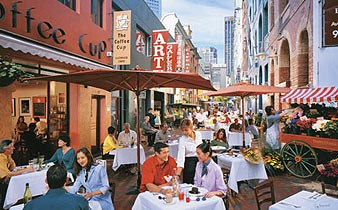
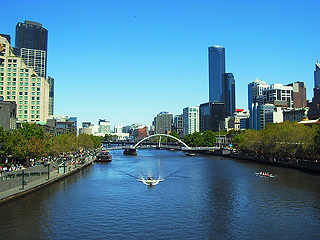
Melbourne is the capital and most populous city in the state of Victoria, and the second most populous city in Australia. The Melbourne City Centre is the hub of the greater metropolitan area and the Census statistical division—of which "Melbourne" is the common name. As of June 2010, the greater geographical area had an approximate population of four million. Inhabitants of Melbourne are called Melburnians or Melbournians.
The metropolis is located on the large natural bay known as Port Phillip, with the city centre positioned at the estuary of the Yarra River (at the northernmost point of the bay). The metropolitan area then extends south from the city centre, along the eastern and western shorelines of Port Phillip, and expands into the hinterland. The city centre is situated in the municipality known as the City of Melbourne, and the metropolitan area consists of a further 30 municipalities.
Bislama Legal Translation
Upload your documents here for translationOur Valued Clients
