Swahili Payslip Translation
 We provide payslip translations in many languages, including Swahili. Besides letters of appointment or employment contracts, it is a very common document used to verify your past working experience or income.
Our Swahili NAATI translators provide both Swahili to English translation and English to Swahili translation services for documents.
Translate My Payslip
- Can be done within two days or faster
- Express options available
- No office visit required
- Best price guarantee
- NAATI translator stamped
- Mailed to your address
- Just submit your payslips using the form on this page for a free quote
- There are no hidden charges for fast Swahili translation by NAATI certified Swahili translators
- Many happy repeat customers
- We provide discounts for repeat customers or large orders
- NAATI certified Swahili translators for immigration or legal documents
- Full-time Swahili translators experienced in translating all kinds of documents
- Personal, friendly service
Swahili Translation Service Australia-Wide
- Sydney
- Melbourne
- Brisbane
- Perth
- Canberra
- Darwin
- Hobart
- Adelaide
- Wollongong
- Newcastle
- Cairns
- ID card translations
- Degree translations
- Diploma translations
- Passport translation
- Family register/book translations
- Employment reference translations
- Police Clearance Certificate Translation
- Change of name certificate translations
- Vaccination certificate translations
- Education certificate translations
- Employment reference translations
- Birth certificate translation
- Tertiary certificate translations
- Identity certificate translations
- Divorce certificate translations
- Baptism certificate translations
- Custody document translations
- Academic transcript translations
- Legal translation services
- Death certificate translation
- Degree certificate translations
- Marriage certificate translations
- Medical certificate/report translations
- Letters of appointment translations
- Employment contract translations
- Academic transcript translations
- Professional certificate translations
- Trade certificate translations
- Driving licence translation
- Motor cycle licence translations
- Primary school certificate translations
- Secondary certificate translations
- Vocational certificate translations
- Swahili is a Bantu language with heavy influences from Arabic, due to centuries of trade between East African coastal regions and the Arab world.
- It is spoken by over 16 million native speakers and more than 80 million people as a second language across East Africa.
- Swahili is the official language of Kenya, Tanzania, and Uganda and is used as a lingua franca across much of East Africa.
- It was the first African language to be recognised as a working language by the African Union.
- Swahili has contributed words to English, such as "safari" (meaning journey) and "jenga" (meaning build).
Swahili, also known by its local name Kiswahili, is a Bantu language originally spoken by the Swahili people, who are found primarily in Tanzania, Kenya, and Mozambique (along the East African coast and adjacent littoral islands). Estimates of the number of Swahili speakers, including both native and second-language speakers, vary widely. They generally range from 60 million to 150 million; with most of its native speakers residing in Tanzania.
Swahili has a significant number of loanwords from other languages, mainly Arabic, as well as from Portuguese, English and German. Around 40% of Swahili vocabulary consists of Arabic loanwords, including the name of the language (سَوَاحِلي sawāḥilī, a plural adjectival form of an Arabic word meaning 'of the coasts'). The loanwords date from the era of contact between Arab traders and the Bantu inhabitants of the east coast of Africa, which was also the time period when Swahili emerged as a lingua franca in the region.
Due to concerted efforts by the government of Tanzania, Swahili is one of three official languages (the others being English and French) of the East African Community (EAC) countries, namely Burundi, Democratic Republic of the Congo, Kenya, Rwanda, Somalia, South Sudan, Tanzania, and Uganda. It is the lingua franca of other areas in the African Great Lakes region and East and Southern Africa. Swahili is also one of the working languages of the African Union and of the Southern African Development Community. The East African Community created an institution called the East African Kiswahili Commission (EAKC) which began operations in 2015. The institution currently serves as the leading body for promoting the language in the East African region, as well as for coordinating its development and usage for regional integration and sustainable development. In recent years South Africa, Botswana, Namibia, Ethiopia, and South Sudan have begun offering Swahili as a subject in schools or have developed plans to do so.
Shikomor (or Comorian), an official language in Comoros and also spoken in Mayotte (Shimaore), is closely related to Swahili and is sometimes considered a dialect of Swahili, although other authorities consider it a distinct language. In 2022, based on Swahili's growth as a prominent international language, the United Nations declared Swahili Language Day as 7 July to commemorate the date that Julius Nyerere adopted Swahili as a unifying language for African independence struggles.
Our translators in Melbourne collaborate and work with colleagues from Sydney Translation Services to delivery fast NAATI translation services.

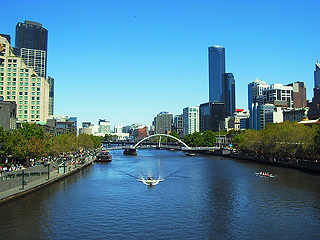
Melbourne is the capital and most populous city in the state of Victoria, and the second most populous city in Australia. The Melbourne City Centre is the hub of the greater metropolitan area and the Census statistical division—of which "Melbourne" is the common name. As of June 2010, the greater geographical area had an approximate population of four million. Inhabitants of Melbourne are called Melburnians or Melbournians.
The metropolis is located on the large natural bay known as Port Phillip, with the city centre positioned at the estuary of the Yarra River (at the northernmost point of the bay). The metropolitan area then extends south from the city centre, along the eastern and western shorelines of Port Phillip, and expands into the hinterland. The city centre is situated in the municipality known as the City of Melbourne, and the metropolitan area consists of a further 30 municipalities.