Albanian Payslip Translation
 We provide payslip translations in many languages, including Albanian. Besides letters of appointment or employment contracts, it is a very common document used to verify your past working experience or income.
Our Albanian NAATI translators provide both Albanian to English translation and English to Albanian translation services for documents.
Translate My Payslip
- Can be done within two days or faster
- Express options available
- No office visit required
- Best price guarantee
- NAATI translator stamped
- Mailed to your address
- Just submit your payslips using the form on this page for a free quote
- There are no hidden charges for fast Albanian translation by NAATI certified Albanian translators
- Many happy repeat customers
- We provide discounts for repeat customers or large orders
- NAATI certified Albanian translators for immigration or legal documents
- Full-time Albanian translators experienced in translating all kinds of documents
- Personal, friendly service
Albanian Translation Service Australia-Wide
- Sydney
- Melbourne
- Brisbane
- Perth
- Canberra
- Darwin
- Hobart
- Adelaide
- Wollongong
- Newcastle
- Cairns
- ID card translations
- Degree translations
- Diploma translations
- Passport translation
- Family register/book translations
- Employment reference translations
- Police Clearance Certificate Translation
- Change of name certificate translations
- Vaccination certificate translations
- Education certificate translations
- Employment reference translations
- Birth certificate translation
- Tertiary certificate translations
- Identity certificate translations
- Divorce certificate translations
- Baptism certificate translations
- Custody document translations
- Academic transcript translations
- Legal translation services
- Death certificate translation
- Degree certificate translations
- Marriage certificate translations
- Medical certificate/report translations
- Letters of appointment translations
- Employment contract translations
- Academic transcript translations
- Professional certificate translations
- Trade certificate translations
- Driving licence translation
- Motor cycle licence translations
- Primary school certificate translations
- Secondary certificate translations
- Vocational certificate translations
Albanian, or shqip Albanian pronunciation: [ʃcip]) is an Indo-European language spoken by approximately 7.6 million people, primarily in Albania and Kosovo but also in other areas of the Balkans in which there is an indigenous Albanian population, including western Macedonia, southern Montenegro, southern Serbia and northwestern Greece.
- Albanian forms its own unique branch in the Indo-European language family, with no close relatives.
- The language is divided into two main dialects: Gheg (spoken in the north) and Tosk (spoken in the south). Standard Albanian is based on the Tosk dialect.
- It is one of the oldest languages in Europe, with origins tracing back over 2,500 years.
- Albanian shares features with other Balkan languages like Greek, Macedonian, and Bulgarian due to geographic proximity and historical interactions.
- Despite its ancient roots, Albanian has many loanwords from Latin, a result of Roman occupation.
Origin of the Albanians
The origin of the Albanians has been the subject of historical, linguistic, archaeological and genetic studies. The first mention of the ethnonym Albanoi occurred in the 2nd century AD by Ptolemy describing an Illyrian tribe who lived around present-day central Albania. The first attestation of medieval Albanians as an ethnic group is in the 11th century.
Albanians have a western Paleo-Balkan origin. Besides the Illyrians, theories regarding which specific ancient Paleo-Balkan group had participated in the origin of the Albanians vary between attributing Thracian, Dacian, or another Paleo-Balkan component whose language was unattested. Among those scholars who support an exclusively Illyrian origin, there is a distinction between those who propose a direct continuity from Illyrian times, and those who propose an in-migration of a different Illyrian population. However, these propositions are not mutually exclusive. The Albanians are also one of Europe's ethnic groups with the highest number of common ancestors within their own ethnic group even though they share ancestors with other ethnic groups.
Albanian is an Indo-European language and the only surviving representative of its own branch, which belongs to the Paleo-Balkan group, having its formative core in the Balkans after the Indo-European migrations in the region. Early Proto-Albanian speakers came into contact with Doric Greek (West Greek) since the 7th century BCE, and with Ancient Macedonian during the 5th–4th centuries BCE. Thereafter they also had contacts with Koine Greek. Proto-Albanian speakers came into contact with Latin after the Roman conquest of the Western Balkans in the 2nd century BCE, but the major Latin influence in Proto-Albanian occurred during the first years of the common era onwards, when the Western Balkans were eventually incorporated into the Roman Empire after the Great Illyrian Revolt (6–9 CE). Latin loanwords were borrowed through the entire period of spoken Latin in the Western Balkans, reflecting different chronological layers and penetrating into almost all semantic fields. Proto-Albanian speakers were Christianized under the Latin sphere of influence, specifically in the 4th century CE.
All aspects of Albanian tribal society have been directed by the Albanian traditional law code, which is of interest to Indo-European studies as it reflects many legal practices of great antiquity that find precise echoes in Vedic India and ancient Greece and Rome. The surviving pre-Christian elements of Albanian culture indicate that Albanian mythology and folklore are of pagan Paleo-Balkanic origin.
Our translators in Melbourne collaborate and work with colleagues from Sydney Translation Services to delivery fast NAATI translation services.
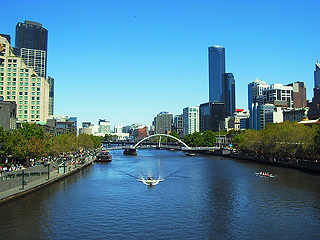
Melbourne is the capital and most populous city in the state of Victoria, and the second most populous city in Australia. The Melbourne City Centre is the hub of the greater metropolitan area and the Census statistical division—of which "Melbourne" is the common name. As of June 2010, the greater geographical area had an approximate population of four million. Inhabitants of Melbourne are called Melburnians or Melbournians.
The metropolis is located on the large natural bay known as Port Phillip, with the city centre positioned at the estuary of the Yarra River (at the northernmost point of the bay). The metropolitan area then extends south from the city centre, along the eastern and western shorelines of Port Phillip, and expands into the hinterland. The city centre is situated in the municipality known as the City of Melbourne, and the metropolitan area consists of a further 30 municipalities.